Tropical Banana and Palm Leaves Silhouette
First Impressions: Calm, Clean, and Instantly Recognizable
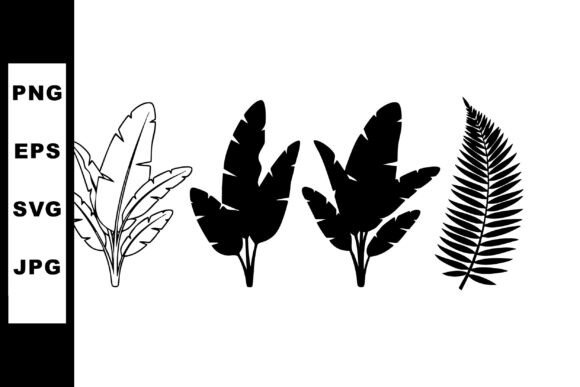
When I opened Tropical Banana and Palm Leaves Silhouette, my first thought wasn’t “pretty”—it was “usable.” The black-and-white vector silhouettes land with quiet confidence: no gradients, no busy outlines, just bold, fluid shapes that read clearly at a glance. It’s calm—not sleepy, not bland—just grounded in simplicity. The banana leaves curve with natural rhythm; the palm fronds extend with graceful asymmetry. There’s breathing room between elements, and no detail fights for attention. That’s rare in nature-themed illustrations—and critical for embroidery.
A Real Project Test: Embroidering a Linen Tote for a Boutique Launch
Last week, I prepped this design for a custom linen tote bag destined for a coastal boutique’s summer collection. Not a mockup—actual fabric, actual thread, actual client deadline. I chose a medium-weight natural linen, medium-cut stabilizer, and matte black rayon thread. What stood out immediately was how well Tropical Banana and Palm Leaves Silhouette translated from screen to stitch: the clean edges held up beautifully in satin and fill stitch, the negative space between leaves stayed open (no dreaded “stitch bleed”), and the overall scale felt intentional—not cramped, not sprawling. Customers responded before it even hit the shelf: “It looks handmade, but polished,” one said. That balance is hard-won—and this design delivers it.
Where It Shines (and Why)
- Custom apparel: Works especially well on sweatshirts and relaxed-fit tees—its organic flow softens structured garments without looking fussy.
- Tote bag design & kitchen textiles: On tea towels and aprons, the silhouette reads cleanly even after repeated washing—no fine linework to fray or blur.
- Baby embroidery & nursery decor: Its gentle rhythm and lack of sharp angles make it ideal for onesies, burp cloths, and pillow covers where subtlety reads as care.
- Embroidered patch & holiday gifts: As a standalone motif on twill or denim patches, it stitches crisply and holds up to iron-on or sew-on application.
- Digital product previews: Because it’s vector-based and high-contrast, it converts flawlessly into printable mockups—no pixelation, no color shifts.
Where to Pause—and Why
Tropical Banana and Palm Leaves Silhouette isn’t magic—it’s thoughtful design, and thoughtful design asks for thoughtful execution. Use caution on:
- Small hoop sizes (under 4”): The full composition may need cropping. Prioritize one strong leaf cluster over compressing everything.
- Stretchy or thin fabric: Like lightweight knits or rayon challis—stabilizer choice becomes non-negotiable. Skip tear-away alone; go hybrid or cut-away.
- Dark or textured fabrics: While the silhouette is bold, dense weave or heavy slubs can mute stitch definition. Test thread contrast—matte charcoal often reads better than true black on navy or charcoal.
- Curved surfaces (caps, beanies): The longest frond tips may distort if hooped too tightly. Slightly reduce density in outer curves—or simplify the layout to 2–3 central leaves.
- Frequent-wash items (baby clothes, kitchen towels): Reinforce with a light topping of water-soluble stabilizer to lock down satin-stitched edges.
What It Does for Your Craft Business—Beyond the Stitch
This isn’t just another machine embroidery design. It’s a quiet trust-builder. When your Etsy seller listing shows a crisp, balanced Tropical Banana and Palm Leaves Silhouette on a cream canvas tote, buyers don’t just see a pattern—they register intention, cohesion, and quality control. That lifts perceived value. For small shop owners, it supports brand consistency across product lines: same motif on a pillow cover, an apron, and a greeting card insert feels curated—not recycled. And for craft fair makers? It’s gift-ready energy: warm, unhurried, and unmistakably handmade—even when stitched digitally.
Practical Designer Notes Before You Stitch
- Test the embroidery file on scrap fabric matching your final project’s weight and stretch.
- Check thread color contrast—not just on white, but on your actual base fabric under natural light.
- Review stitch density: high-fill areas (like broad leaf bases) should breathe—over-stuffing causes puckering.
- Confirm hoop size compatibility before digitizing or resizing—especially if adapting for caps or curved seams.
- Inspect small details: Are leaf tips sharp enough to stitch cleanly? If not, a slight vector tweak helps more than forcing dense running stitch.
- Use black-and-white mockups to verify readability—this design thrives on contrast, not color.
- Choose stabilizer based on fabric behavior—not just recommendation. Linen needs different support than cotton poplin.
- Verify licensing: Since this is categorized as Illustrations and Graphics, confirm whether commercial use (e.g., selling finished embroidered products or digital embroidery files) is permitted.
The Bottom Line for Makers Who Ship Real Work
Tropical Banana and Palm Leaves Silhouette earns its place in a working designer’s library because it respects both the machine and the maker. It doesn’t demand perfection—it invites smart choices. Whether you’re stitching a personalized gift for a friend’s baby shower, building a cohesive line of tropical-themed merchandise, or sourcing reliable design assets for your next digital embroidery file bundle, this silhouette delivers clarity without coldness, style without strain. It’s not flashy—but in the world of handmade product and custom apparel, calm confidence is the rarest, most valuable stitch of all.