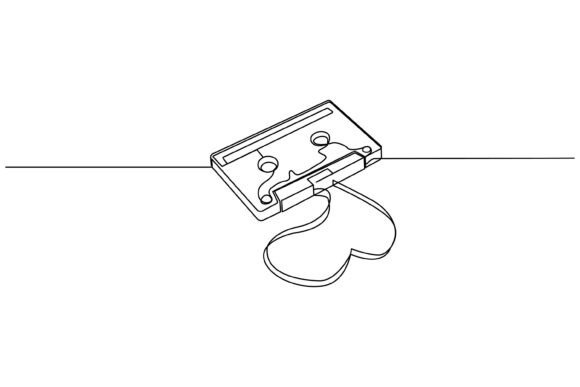
Retro Tape Cassette One Continuous
First Impressions: Clean, Nostalgic, and Surprisingly Versatile
When I opened Retro Tape Cassette One Continuous, I didn’t just see a cassette illustration—I felt the quiet hum of a Walkman rewinding. It’s drawn in one unbroken line, with subtle decorative flourishes framing the tape reels and shell. No heavy fills, no dense gradients—just confident, rhythmic linework on a clean white background. That simplicity is its strength. As an embroidery designer who’s stitched everything from tiny baby onesies to oversized tote bags, I immediately sensed this wouldn’t fight the fabric—it would *breathe* with it.
A Real-World Test: Embroidering It on a Linen Kitchen Towel
Last week, I used Retro Tape Cassette One Continuous for a small-batch kitchen towel series for a local boutique. Linen’s slubby texture can swallow fine lines, but because this design avoids micro-details and relies on smooth, continuous contouring, it held up beautifully—even at 3.5 inches wide. I ran it as a satin-stitched outline (no fill), paired with a soft heather grey thread. Customers loved how it looked both handmade and intentional—not “cute,” but quietly cool. That’s the sweet spot: nostalgic without leaning into kitsch, graphic enough for branding, delicate enough for gifting.
Where It Shines—and Where to Pause
Retro Tape Cassette One Continuous excels on stable, medium-weight fabrics: cotton canvas totes, brushed fleece sweatshirts, structured aprons, and tea towels. Its open layout means minimal stitch density—ideal for lightweight stabilizer and faster hooping. I’ve stitched it successfully on baby rompers (using tear-away + light cutaway) and on curved cap fronts (with a slow-speed hoop and careful digitizing prep).
But here’s where attention matters: avoid using it full-size on highly textured or stretchy knits like jersey t-shirts unless you’re adding underlay and reducing speed. The continuous line has gentle curves—but tight corners near the tape head could pucker on thin fabrics if not stabilized properly. And while it reads clearly on dark backgrounds in mockups, always test thread contrast in person: a charcoal grey thread on navy denim? Yes. A pale yellow on black? Might vanish.
What This Design Says About Your Finished Product
When your customer sees Retro Tape Cassette One Continuous stitched cleanly onto a handmade pillow cover or embroidered patch, they don’t just register “cassette.” They read *intention*, *craft*, and *personality*. It signals that you understand balance—between retro reference and modern execution, between visual impact and tactile subtlety. For Etsy sellers and craft fair vendors, that builds trust fast. It’s not a trend-chasing clipart piece; it feels curated. That elevates perceived value, especially for personalized gifts (think: “mixtape” wedding favors or birthday sweatshirts for music teachers).
Practical Designer Notes You’ll Want to Keep Handy
- Always stitch a test on scrap fabric first—especially if pairing it with other elements or layering it over seams.
- Check the EPS and SVG files for clean vector paths before digitizing. Since it’s a one-line design, stray anchor points or overlapping nodes can cause stitching hiccups.
- Confirm licensing terms before selling finished items commercially—or bundling the JPG/SVG as part of a digital embroidery file pack. As an Illustration/Graphics asset, usage rights aren’t automatic.
- Use proper stabilizer: light cutaway for knits, tear-away for stable wovens, and a touch of water-soluble on sheer fabrics like voile.
- Review stitch direction in your embroidery software. A single-line design like this benefits from consistent pull—avoid reversing segments mid-stitch.
- Test it in black-and-white mockups alongside your product photos. Does the shape hold up at thumbnail size? On a phone screen? It does—cleanly.
- Compare light vs. dark fabric backgrounds in real life—not just on screen. That white background in the JPG doesn’t mean it only works on light fabric.
Why This Fits So Well in a Craft Business Toolkit
Retro Tape Cassette One Continuous isn’t just another machine embroidery design—it’s a flexible design asset. You can scale it down to 1.75 inches for a minimalist cap logo, enlarge it to 5 inches for a statement tote bag front, or combine it with custom text (“Rewind & Relax”) for printable mockups or social media banners. As a Graphics file, it bridges embroidery and print: use the SVG for iron-on transfers, the EPS for vinyl cutting, the JPG for digital product previews.
I’ve seen small shop owners use it across three seasons: spring aprons for record store pop-ups, summer camp patches for music programs, holiday tea towel sets with hand-stitched accents. It never feels dated—because it leans into timelessness, not trendiness. And for hobbyists and makers, that’s gold: one design, many iterations, zero creative fatigue.
A Final Thought Before You Stitch
If you’re choosing Retro Tape Cassette One Continuous for a client project—say, branded merchandise for a vinyl café or custom baby embroidery for a music-loving parent—remember: its charm lives in restraint. Don’t overcomplicate it with extra fills or borders. Let the line speak. That’s what makes it feel handmade, not mass-produced. That’s what makes customers pause, smile, and say, “I get it.” And in a crowded handmade market? That kind of quiet resonance is worth every stitch.